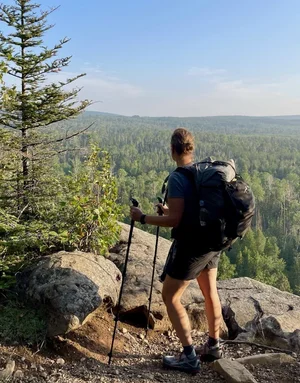
What the Wilderness Taught Me About Coming Home
"So much has gone awry the last few days," I wrote in my backcountry journal. "But we're having a wonderful time nonetheless. I can't help but be grateful for the gift of grit to tough it out and make the most of what nature has dealt us. It seems to me that the struggles in life make it that much more rewarding."
My husband and I were on the backend of a ten-day wilderness canoe trip. Leading up to the trip, we were most concerned about day one, when we needed to cross at least a dozen miles of big open water to fulfill the legal requirements of our permit. Large bodies of water can become treacherous in less-than-perfect weather conditions. But as I'm learning, the things I worry about most rarely come to fruition. We enjoyed perfect weather and calm water that day. The backend of the trip was another story.

Paddling Moose Lake in the Boundary Waters Canoe Area Wilderness in Cook County, Minnesota
After a long day of paddling past fully occupied campsites on the last leg of our trip, we lucked out and found the very last campsite within the wilderness boundary open. Not only was it unoccupied, but it exceeded our expectations. We marveled at our good fortune as we set up camp and settled in for a few days of walleye fishing. Once we had everything dialed in, I grabbed some snacks and prepared a couple of cocktails for happy hour. As we settled in around the fire pit, I looked up and was overcome with a wave of anxiety.
The Reality of Wilderness
"I hope that isn't headed toward us," I said, pointing at a massive storm cell moving rapidly toward us. "I'm afraid it is," my husband replied. "Let's get everything picked up." Ten minutes later, the storm hit, and it was relentless—the kind you see in movies but never expect to experience. It passed quickly but was an unfortunate teaser of what was yet to come.
The storms were uncompromising those last few days—the kind that ensure even the most high-end gear won't stay dry. Rather than spending hours on the lake angling for walleye, we spent hours taking cover, trying to stay warm and dry. As the days progressed, the reports from the weather radio got worse. The temperatures took a dramatic dip, and in addition to the rain and wind, they were now predicting snow. Given that our route was primarily over large bodies of water, we discussed leaving early to be safe due to the 40 MPH winds that were forecast.
"Let's play it by ear," I told my husband. "We can use the inReach to get a more accurate forecast when the time comes." The day before our planned departure, the weather radio was still reporting dreadful weather. Determined to have at least one walleye dinner, I fired up the inReach and found a much more agreeable forecast. We decided we were safe to stick with our original plan.
Our last full day of that trip was perfect—sunny skies, calm water, and decent fishing. "I'm so glad we decided to stay," I said as our canoe floated over the glass-like water. "Yeah, it turned out to be much nicer than I expected," my husband replied. "There's nothing like this—completely undistracted and connected to life." "I was just thinking the same thing," I replied. "We should keep this in mind when we build our retirement home and do our best to recreate this feeling."

Sunset fishing on Pine Lake in the Boundary Waters Canoe Area Wilderness
Of course, the weather on the last day was miserable. The temperature hovered in the mid-thirties, and precipitation varied between a constant drizzle, sleet, and brief downpours. Just as we were loading the canoe to head out, the wind picked up. This made crossing the lake to get to the footpath that would connect us to the next lake an intense challenge. Luckily, the final lake was sheltered from the wind by high cliffs, making for a relaxing, yet cold and drizzly paddle.
"Are you still enjoying your trip?" my husband asked as we paddled. "I am," I replied. "And you?" "Yeah, even with this weather, I'd rather be here than anywhere else," he agreed.
Coming Home
As I've shared in many articles and social media posts, my spouse and I didn't grow up doing things like this. We discovered the great outdoors in our late twenties, and it's become an increasingly important part of our lives ever since. But as the years and experiences have ticked by, so has my discontentment when returning home to the city.
The contrast is palpable. The ruthless, anxiety-inducing pursuit of more feels hollow after our time outdoors. Each trip illuminates that the way we're living our modern lives has an undeniable effect on our health and happiness. We're losing touch with what matters most—our connection to ourselves, the earth, and one another.
Why This Matters Now More than Ever
Since the start of this decade, not a year has gone by without a period that felt extremely chaotic. This is especially true if we're paying attention on a global scale. If you look hard enough on any given day, you can find evidence that the world is about to implode.
But if we look back through history, it seems it's always been this way. The biggest difference today is the nonstop tsunami of information fueled by the media's insatiable need to drive clicks and profits. When I allow myself to fall into these negative news spirals, I know I'm not living and creating to the best of my ability. And this is when I most need to draw on the lessons I learned in the wilderness.
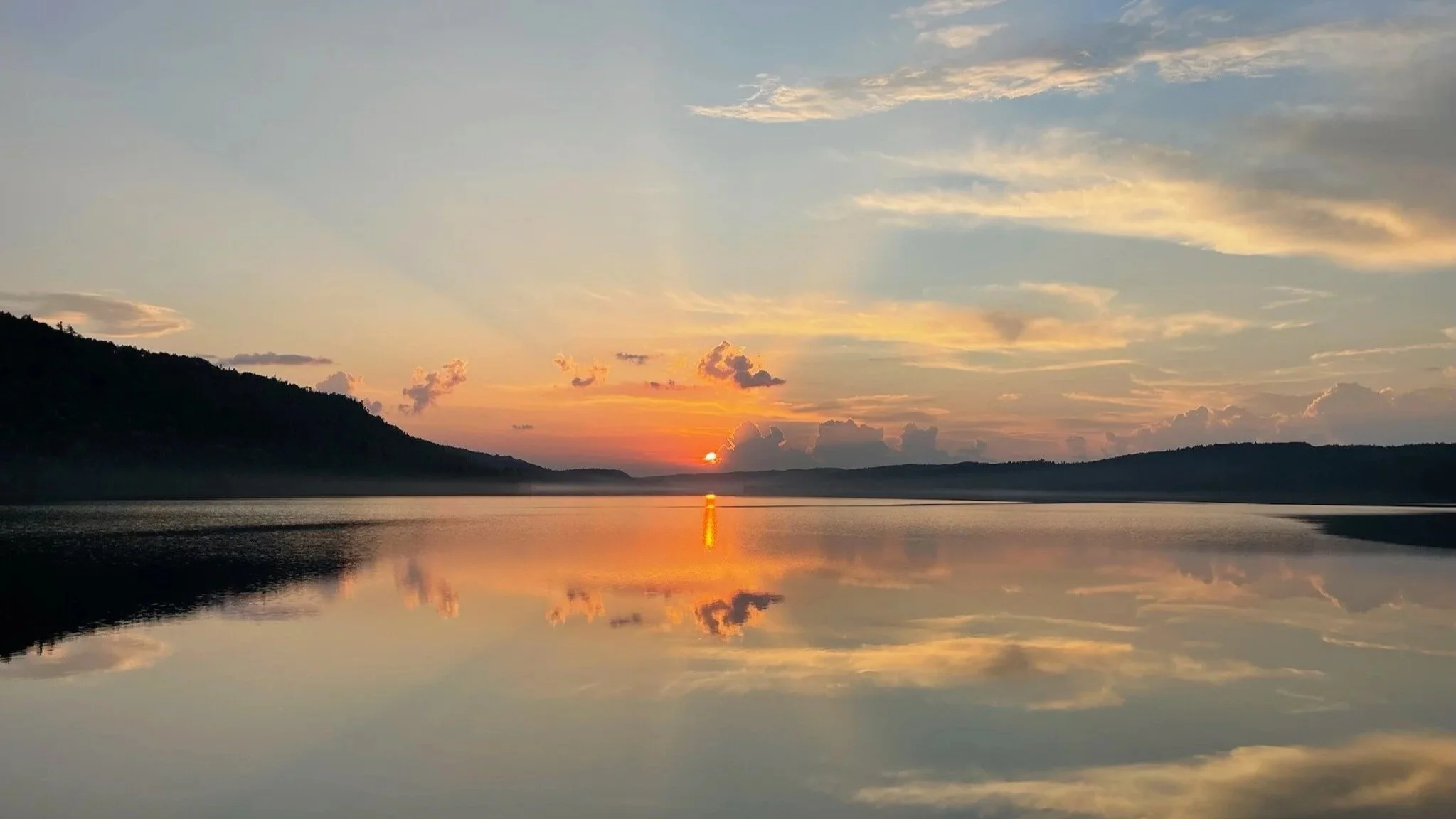
Unforgettable sunset after the storms passed during a wilderness canoe trip in the BWCA
Three Wonderful Ways to Rewild Our Daily Lives
1. Savor Joy in the Ordinary
"Did you try it yet?" my husband asked with a smirk. I couldn't tell if that look meant the backcountry dinner we'd cobbled together was incredible or inedible.
After I finished cleaning up, I took my first bite. "Oh my," I exclaimed, "this is really, really good!" "I know," he smiled, "I did not expect this."
Calories, nutrition, and weight are my top three priorities in backcountry meal planning. It’s important to have meals we look forward to as well, but only after they meet those first three criteria. Last season, I added one more consideration to the mix—to consume everything that would expire before the next season.
We keep an abundance of backcountry provisions on hand so we can grab and go when the opportunity for last-minute adventures arise. We then grab what sounds good in the moment. Eventually, things that sound less enticing start to pile up, and I need to sort through and prioritize what needs to be consumed.
One of these meals was an African peanut stew that sounded exciting when I bought it, but boring when I thought about eating it on the trail. So, it sat in a storage container until it could sit no longer. And that’s how it landed in this trip’s food pack. After a day of lackluster fishing, we prepared the stew, served it over rehydrated rice like a curry, and were astounded by the fantastic taste and texture.
We raved about it for the rest of the trip. It even made my husband's highlight reel when telling his friends and coworkers about our adventure. A small, seemingly boring thing we overlooked for years delivered immense joy in the backcountry.
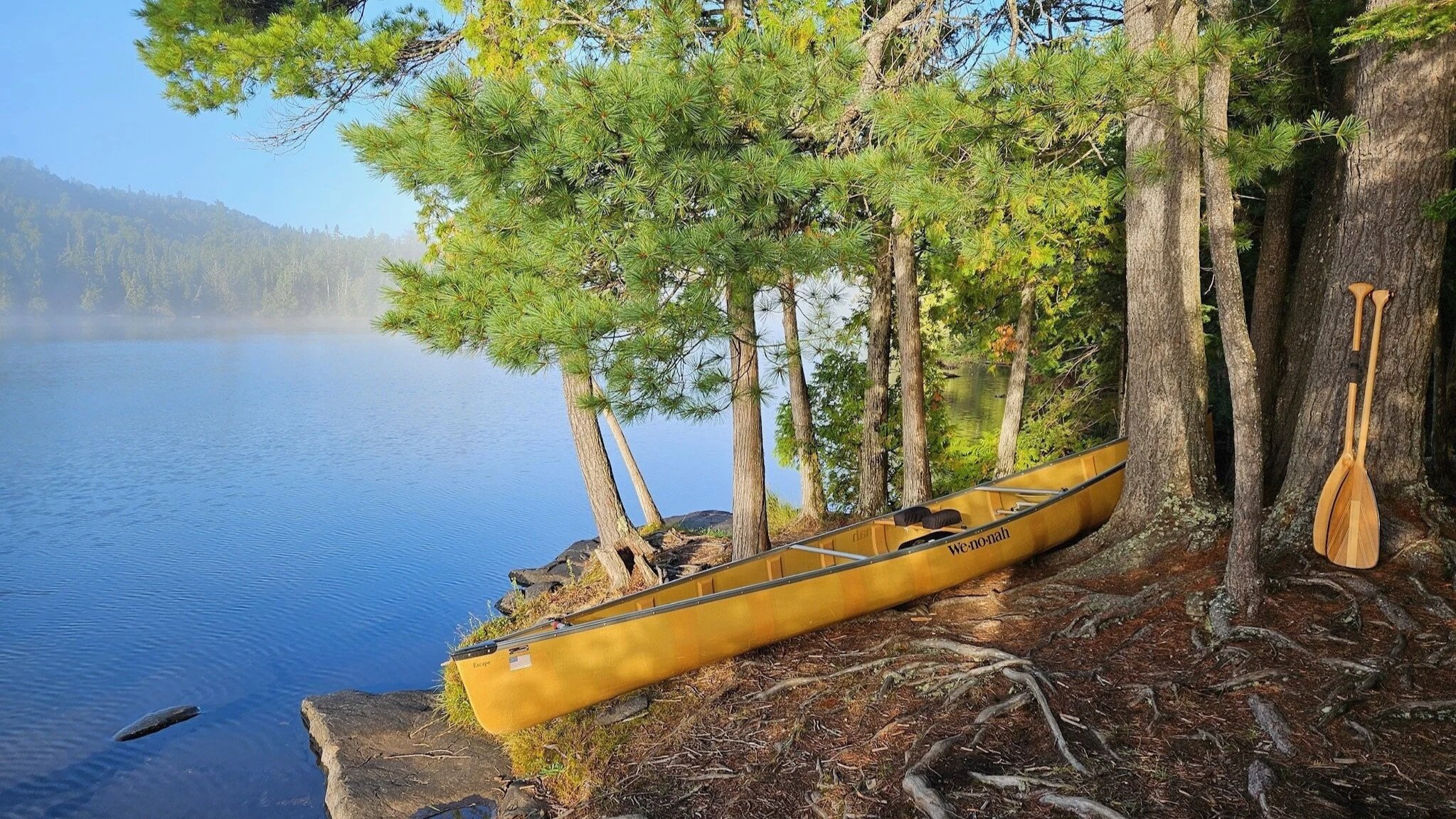
Morning fog dissipating from Clearwater Lake in the Boundary Waters Canoe Area Wilderness
How to Savor Joy in Everyday Life
Give Yourself Permission
When I'm away from home in the great outdoors, I seem to enjoy everything more. Whether it's peanut stew or doing dishes, everything feels more pleasurable. When I'm at home, however, these same activities often feel like work. Same task—different feeling.
Then it dawned on me one evening while folding laundry. Zoned out, loading clothes in the basket, I realized I was enjoying myself. Huh, I thought. Why have I never realized it's okay to enjoy these things?
How would your life be different if you allowed yourself to enjoy more of the little things?
Practice Gratitude
I lost track of how many times we talked about how good the peanut stew was—a verbal exchange of gratitude for something simple that was wonderful and unexpected. But how often are we doing this in our daily lives?
Before Valentine's Day 2012, gratitude wasn't part of my daily life. But that day, I started a new practice that I continue to this day. Each morning, I jot down at least a dozen things I'm grateful for. Not only has it changed how thankful I am, but it seems to have made those around me more grateful, too.
Take a minute to think about all of the things you have to be grateful for today.
Share the Joy
How would the world be different if we shifted our focus from ourselves, our stressors, and the drama of the day to generously sharing this joy and gratitude with others?
If you've followed me for a while, you know I love solo adventures just as much as the trips I share with others. They're both important and special experiences for me. But here's what I learned from the peanut stew: what made it special was sharing it.

Evenings around the campfire in the Boundary Waters Canoe Area Wilderness never feel long enough
2. Delete Distractions & Embrace the Present
"What does he wear?" my husband asked about Claude—pronounced in a Dutch accent—the alien cat, who rides through the solar systems on his intergalactic jet ski. "He wears a tight-fitting silver suit and looks a lot like Dog the Bounty Hunter," I replied matter-of-factly.
With no access to modern distractions, we spend evenings in the backcountry sitting around the campfire making up intricate stories and hilarious songs. We laugh until we can barely breathe, and when the stories are really good, I record voice memos on my phone to capture the joy we create when we're completely undistracted.
How to Live with Less Distraction and More Presence
Be Intentional with Your Days
In the backcountry—disconnected from modern life—our days follow the rhythm of nature. We get up at dawn, brush our teeth, enjoy our coffee while breaking down camp, and are on the trail or water before the sun. Camp is made in the late afternoon, dinner is cleaned up by sunset, and evenings are spent around the fire, followed by an early bedtime.
I'll admit this rhythm is easy to lose in everyday life, where endless distractions compete for our finite attention. This is why it's so important to be intentional with how we structure our days.
Think about what your ideal day looks like, then create a schedule with space for what matters most: sleep, exercise, work, and time with loved ones. Commit to following that schedule instead of reacting to whatever the world throws at you.
You won't do it perfectly. It might take time to get the structure right. And you'll need to make adjustments as life progresses. But I promise this practice will make your life richer and more rewarding.
Disable Distractions
The last tip will be much easier to implement if you disable distractions. This could take many forms, so I encourage you to play around and find a system that works perfectly for you.
I love audiobooks and podcasts. For years, I always had something playing while cooking, cleaning, and working out—attempting to optimize every moment for learning. One spring day, I set out for a hike at High Falls State Park in Georgia, and I realized I'd forgotten my AirPods. I was thirty minutes into my hike, so turning back to get them didn't make sense. After that hike, I realized that I enjoyed my time in nature so much more without my habitual distractions. I committed to not listening to anything for the first thirty minutes of hikes moving forward. Eventually, I forgot to bring my AirPods altogether. Now, I rarely use them at all.
In what ways could you limit distractions in your life?
Bookend Your Days
When I was in the corporate world, I would usually scan my work email before getting out of bed and brushing my teeth. Before I’d even had my first sip of coffee, my body was flooded with anxiety over emails that filled my inbox while I was sleeping.
A decade later, my mornings look quite different. I don't engage with screens between 8 pm and 8 am, except for meditations and workouts. My phone stays out of the bedroom. And notifications don't exist.
Instead, I nurture my body, mind, and spirit. Evenings end with yoga and meditation. Mornings begin with journaling, reading, and working out. These practices set the tone for my day and ensure restful sleep.
How could you bookend your days to live more peacefully?
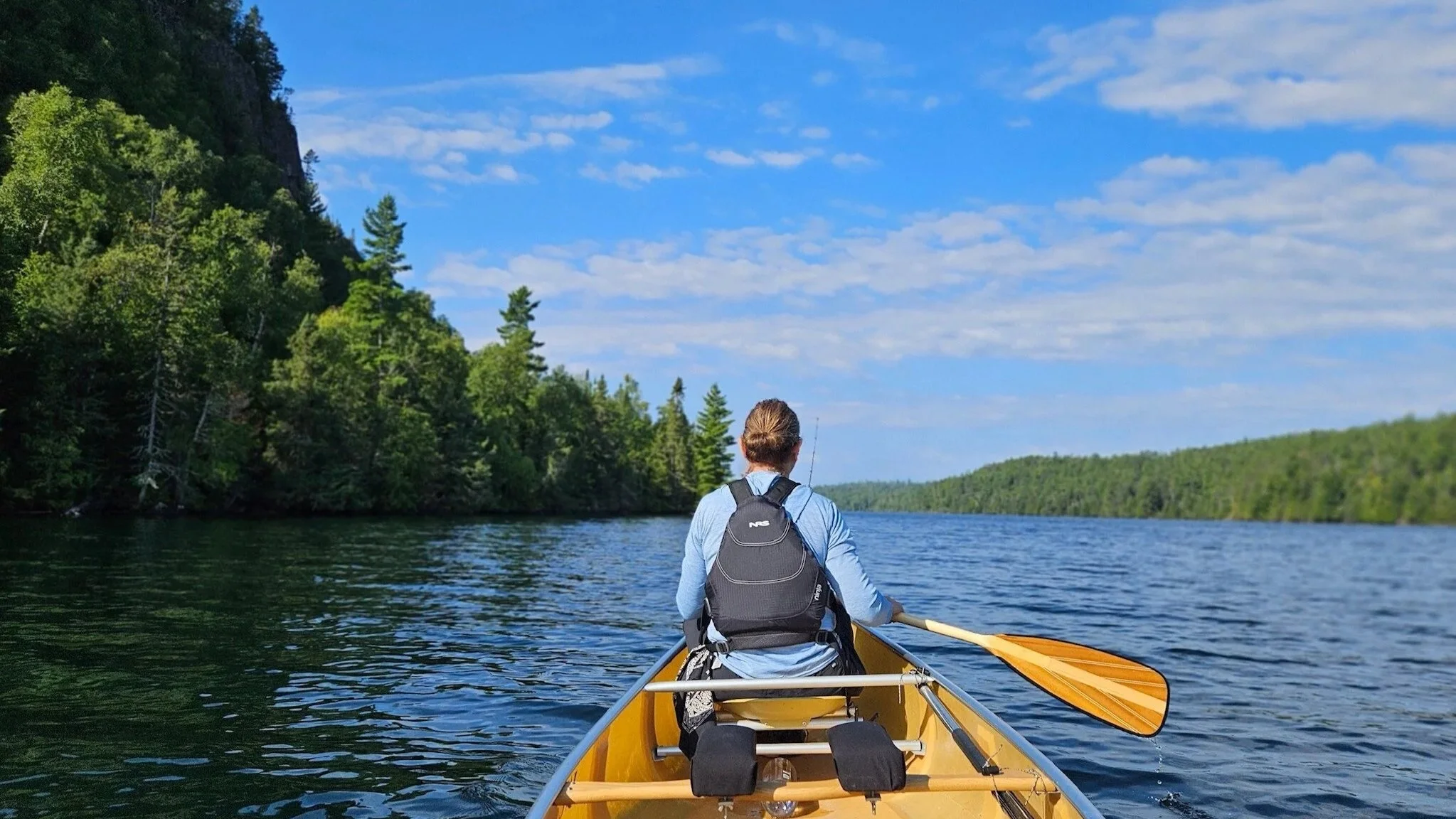
Savoring scenic vistas of the Clearwater Palisades in the Boundary Waters Canoe Area Wilderness
3. Leave Things Better by Leading with Connection
"Well? Do you want to stay here?" my husband asked about a campsite on a large island with epic views. The site was a mess—trash in the firepit, log seating in disarray, and brush piles everywhere. But the weather had turned, and it was drizzling, with waves picking up on the big lake. Getting back on the water didn't sound appealing.
"Are you going to clean all of this up?" I asked.
"Of course," he responded, looking at me like I'd asked the stupidest question ever.
In the outdoors, we practice the seven principles of Leave No Trace to minimize our impact and leave things better. The seven principles include: plan ahead and prepare, travel and camp on durable surfaces, dispose of waste properly, leave what you find, minimize the impacts of fire, respect wildlife, and be considerate of others. I often wonder how different the world would be if we practiced these principles in our daily lives.
How to Leave Everything Better
Practice Leave No Trace Daily
How could you live your daily life in a way that leaves everything better?
We face abundant challenges today. But each of us has the power to lead with intention and leave things better. My daily goal is to live with peace, joy, patience, friendliness, generosity, positivity, and wisdom—regardless of what's going on beyond my control.
It isn't always easy. And I'm rarely met with the same energy. But there are moments when my efforts make a difference, and those are the moments that matter.
Be a Giver
In 2013, organizational psychologist Adam Grant published Give and Take: A Revolutionary Approach to Success. In it, he shares how those who give without expecting anything in return win in the long term. This book changed how we move through the world. That doesn’t mean that my generosity hasn’t been taken advantage of at times. But at the end of each day, I feel good about my actions, and that matters more than any short-term rewards I'd gain by being selfish and participating in the games and drama.
How could you give without expecting anything in return this week?
Practice Radical Friendliness
"I want to be more like him," I wrote in my journal about the campground host at Three Rivers State Park on the Florida-Georgia border. "Hey, Minnesota!" he'd shout with a smile and a wave each time he drove past on his golf cart. I've since labeled his demeanor "radical friendliness."
The world feels pretty divided right now. And loneliness has been described as an epidemic.
Here's the secret, though: Each of us has the power to change this.
We can be the inviters, coordinators, introducers, and connectors. We can practice radical friendliness and hospitality starting today.
Not That Outgoing? Try This:
In 2020, I created a database of friends' birthdays, anniversaries, and addresses. Over the last six years, I haven't missed a greeting. While my friends appreciate it, I benefit too. Reaching out for their milestones keeps us connected and conversations flowing.
What's one way you could practice radical friendliness in the coming year?
As always, I share these stories not as the definitive guide to living, but to inspire you to make tiny shifts that feel right to you. Over the next week or two, pause and ask yourself these questions as you move through your days:
Do I have to do what I'm currently doing?
Does this bring joy or value to my life?
Is this getting me closer to my ideal lifestyle?
If no one saw this, would I still do, say, or buy it?
Through this questioning, you'll identify at least one way to rewild your own life. Write it down. Make it a practice.
Before you know it, you'll find yourself saying: There's no place I'd rather be.
Want more? Subscribe to my Substack for my latest stories and photography. Then join my email newsletter for monthly inspiration, exclusive photos, and practical tips to live an adventurous and intentional life.